


Sustainable Iceland: The Geothermal And Hydroelectric Power Behind Iceland's Tiny Carbon Footprint

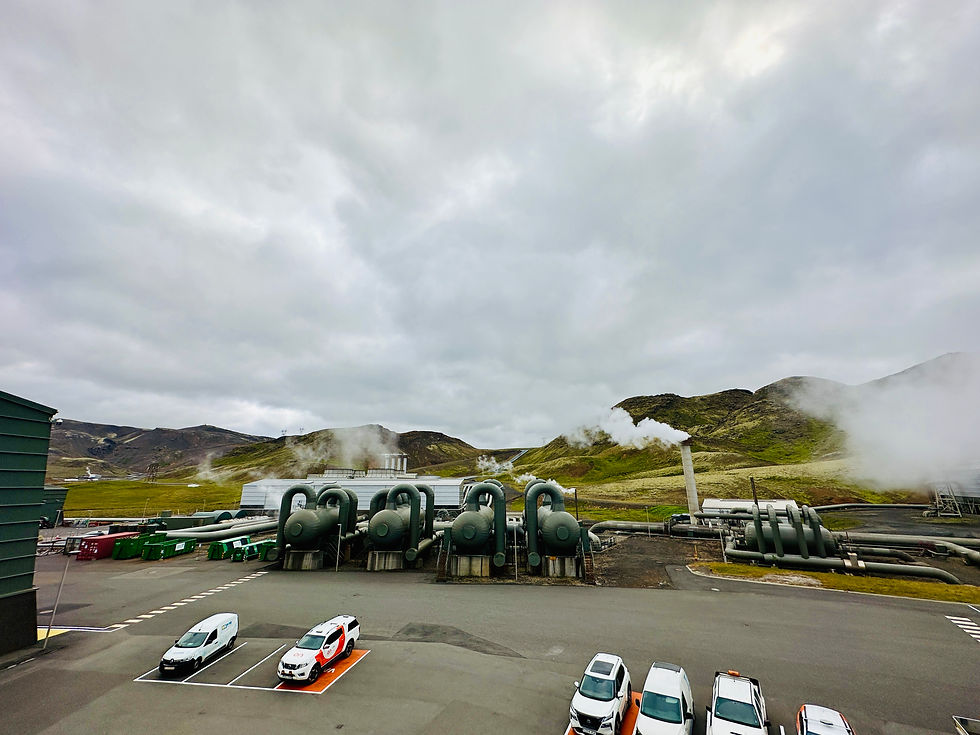
Iceland, a land characterized by majestic glaciers and formidable volcanoes, stands as a unique testament to environmental sustainability. In an effort to make the world a cleaner place, the country generates over 99% of its electricity through renewable sources, notable inclusions being geothermal and hydroelectric. This commitment has resulted in Iceland boasting the lowest carbon footprint among industrialized nations. The country serves as a testament to man's ability to collaborate with nature for a cleaner and greener world.
Iceland is one of the most active volcanic areas on the planet. The island is situated on the Mid-Atlantic Oceanic ridge, a divergent plate boundary where the Eurasian and North American tectonic plates spread to the west and east, respectively, at a rate of around 2 cm per year. The activity of the divergent tectonic plates brings heat and magma closer to the Earth's surface, which renders the abundance of geothermal resources. Using these geothermal resources, energy plants either capture steam to generate energy or use hot geothermal water to generate power. In Iceland, electricity can also be produced with geothermally heated water. The water is heated through the combined activity of the plate boundary and the mantle plume, resulting in numerous earthquakes and high volcanic activity. In Iceland, an eruption occurs on an average of every four years. Most active volcanoes are located within the plate boundary or near the center of the hot spot, where the bedrock is the youngest and hottest. Groundwater that flows through hot rock layers heats up, resulting in geothermal areas. They are categorized based on the temperature areas. The locations of the high and the low-temperature regions result from the bedrock's age and temperature. The island's center is where the magma flows up towards the surface, within the plate boundary itself. The easternmost and westernmost regions are where the bedrock is older and colder. The oldest bedrock on the island is in the Western fjords, around 16 million years old. Production in high-temperature areas focuses on using steam to produce electricity, whereas within low-temperature areas, geothermal hot water can be used for space heating. Eight geothermal power stations in Iceland produce 30% of the country's electricity, while 70% comes from hydroelectric power stations. Iceland, therefore, produces 100% renewable electricity.

One power station is the Hellisheidi Geothermal Power Plant. It is located in the Hengill Area, a southwestern portion of Iceland. It sits atop an active volcanic ridge connected with three other volcanic systems. Within the last 11,000 years, there have been at least three volcanic eruptions, the most recent being 2,000 years ago. It ranks as the world's 6th largest and Iceland's largest geothermal power plant. To generate electricity, the power plant must inject cold water into the geothermally heated water to create flash steam, which then turns a set of turbines surrounded by coils of wire. The spinning motion of the turbines drives generators, which produce electricity through electromagnetic induction. This electricity is then sent out for distribution. After the steam passes through the turbines, it loses energy and condenses into water. This condensed water is then pumped back into the ground to be reheated by the Earth's heat, and the cycle repeats. The resulting energy is 303 MW of electricity and 400 MW of thermal energy. The process minimizes the environmental footprint compared to conventional power plants that rely on fossil fuels and embodies Iceland's commitment to harnessing renewable energy.

Iceland's commitment to renewable energy extends to its capital, Reykjavik, where the electricity with the world's lowest carbon footprint predominantly powers the city. The abundance of energy is so profound that even in winter, heated sidewalks in Reykjavik and illuminated roads between the international airport and the capital city exemplify the innovative utilization of energy. Iceland's success in harnessing geothermal and hydropower stands as a beacon of inspiration, emphasizing the necessity for tailored solutions in the pursuit of a sustainable future.
Meet the Scholar: Rohan
Grade: 12th
Home Base: California, USA
Dream Destination: Antarctica
✨ Want to Explore Like a Scholar? Every place tells a story. What place would you explore through a student’s eyes? Share your journey with Nomadiq Scholars, where travel becomes learning.
